
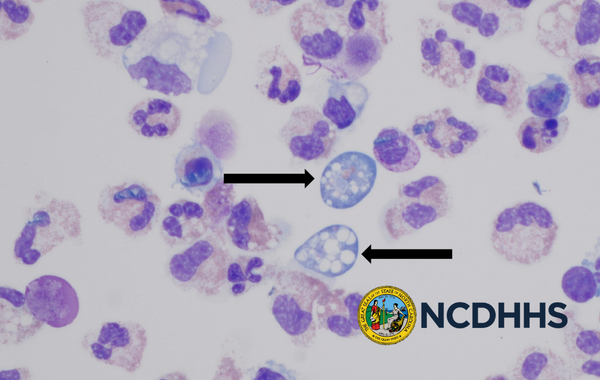
RALEIGH, NC — Public health officials with the North Carolina Department of Health and Human Services (NCDHHS) announced a rare pediatric case involving Naegleria fowleri, a single-celled amoeba commonly found in warm freshwater environments.
The patient, a central North Carolina teenager, is currently critically ill and receiving medical care. Out of respect for the family’s privacy, health officials have stated that no further identifying information will be released.
“Our hearts go out to this teen’s family, friends and loved ones as they navigate this difficult time,” said State Epidemiologist Dr. Zack Moore. “While these infections are very rare, this is an important reminder that this amoeba is present in our state and across the U.S. There are steps people can take to reduce their risk of infection while swimming during the warmer months.”
Understanding Naegleria fowleri and PAM
While the exact source of exposure in this case remains under investigation, Naegleria fowleri is naturally occurring in warm freshwater bodies such as ponds, lakes, and rivers. It does not exist in saltwater or properly maintained, chlorinated swimming pools.
Health officials emphasize that the amoeba does not cause illness if swallowed. However, it can prove fatal if water containing the organism is forced up the nose and travels to the brain, which can happen during swimming, jumping, diving, or water-skiing.
The resulting condition—known as primary amebic meningoencephalitis (PAM)—typically begins with severe headaches, fever, nausea, and vomiting, before rapidly progressing to a stiff neck, seizures, and coma. Once symptoms manifest, the disease advances quickly and usually results in death within approximately five days. Infections are extremely rare in the United States, typically impacting fewer than 10 people annually.
Prolonged periods of hot weather heighten the risk, as higher temperatures (the organism thrives in water up to 115°F) and lower water levels create optimal growth conditions.
Recommended Safety Measures
While the amoeba cannot be entirely eliminated from natural outdoor environments, individuals engaging in warm freshwater activities can take several precautions to minimize risk:
-
Prevent water from entering the nose by holding your nose shut, wearing nose clips, or keeping your head entirely above water.
-
Avoid submerging your head in hot springs or thermal waters.
-
Refrain from jumping or diving into warm freshwater during extended periods of high temperatures and low water levels.
-
Avoid digging in or stirring up bottom sediment in shallow, warm freshwater areas.
For additional resources and guidance, visit the Centers for Disease Control and Prevention (CDC) Naegleria fowleri webpage here.
Coastal Carolina News is an independent, locally owned digital news platform serving Southeastern NC and Northeastern SC
© 2026 CoastalCarolinaNews.com – Jones Media Partners LLC. All rights reserved


1 Trackback / Pingback