
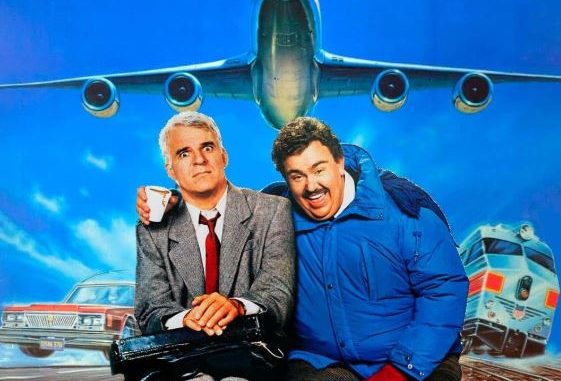

Some movies are good, some are great, and a rare few feel like they were built flawlessly from the ground up. Planes, Trains and Automobiles belongs in that last group. John Hughes, already famous for teen classics, proved here that he could write and direct a comedy for adults that is every bit as funny and far more moving than anyone expected. A ten out of ten is not a number I hand out lightly, but this film earns it.
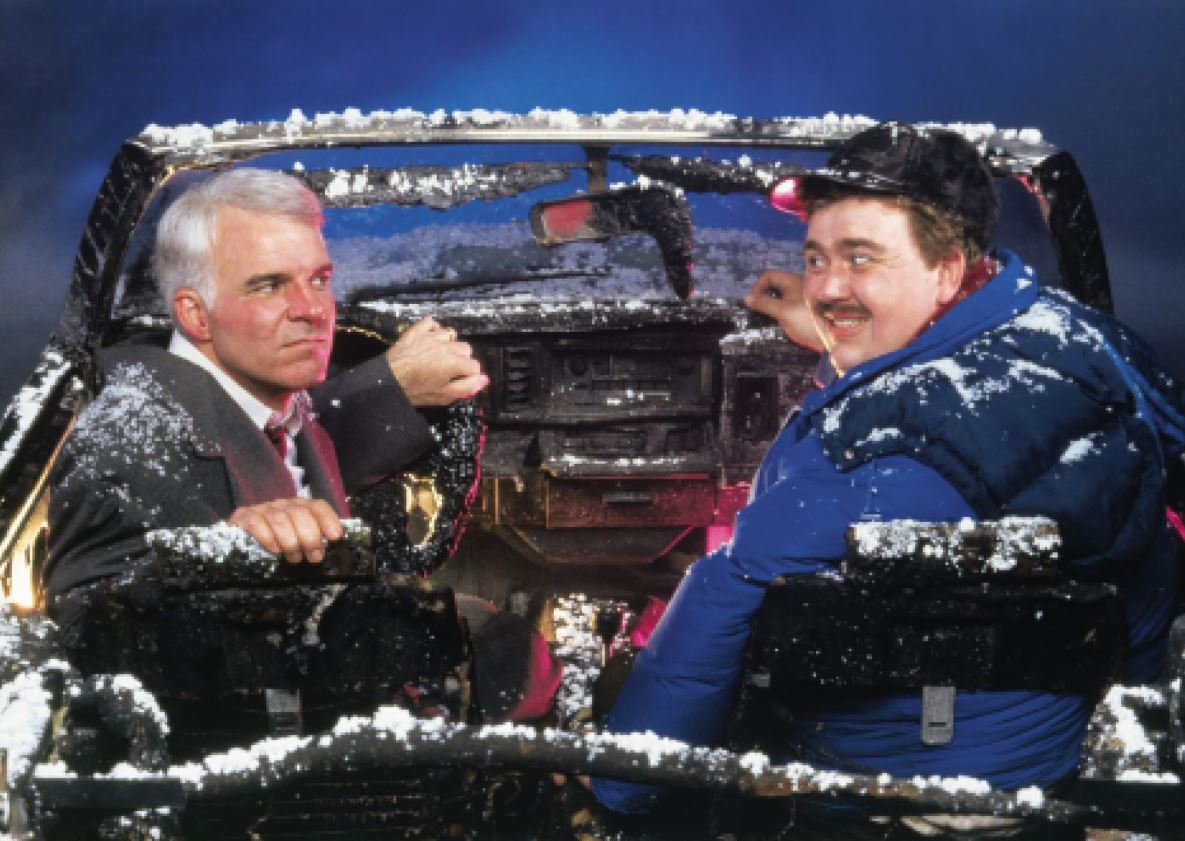
The premise is simple, which is part of its genius. Neal Page, a buttoned-up marketing executive, just wants to get home to Chicago in time for Thanksgiving dinner with his family. Standing between him and that goal are a blizzard, a diverted flight, a broken-down train, and one extremely talkative shower curtain ring salesman named Del Griffith. Everything that follows grows naturally out of that setup.
Steve Martin is wonderful as Neal, and he deserves more credit than he usually gets for playing the straight man. Neal is uptight, impatient, and sharp-tongued, and Martin makes him funny precisely because he is so recognizable. Everyone has felt that rising frustration when travel plans fall apart. Martin lets us laugh at it while still rooting for him. And then there is John Candy, who delivers what may be the finest performance of his career. Del Griffith could easily have been a one-note annoyance, but Candy plays him with such warmth, vulnerability, and comic timing that you end up adoring him. He is loud, oblivious, and relentlessly cheerful, yet there is always something deeper flickering underneath. It is a performance that makes you laugh out loud in one scene and tear up in the next. The chemistry between the two leads is the beating heart of the film. Martin and Candy play off each other like a veteran comedy duo, trading rhythms, reactions, and silences with remarkable precision. Neal’s exasperation and Del’s obliviousness create comedy that never gets stale. Every scene they share crackles, and the film is never better than when the two of them are simply stuck together.
Hughes’s screenplay deserves enormous praise for balancing so many tones at once. The film is a slapstick road comedy, a sharp social satire, and a quietly heartfelt story about loneliness and friendship. Lesser writers would have let one of those elements overwhelm the others. Hughes weaves them together so smoothly that the transitions feel effortless.
The opening act sets the stage brilliantly. We watch Neal scramble through a chaotic New York afternoon, fighting to hail a cab and losing out to a quick-moving stranger (a young Kevin Bacon, in a fun cameo). By the time Neal boards his flight, we already understand his world and his temperament. It is an efficient, funny introduction that makes the coming collision with Del all the more satisfying. The film’s structure is a masterclass in escalation. Each mode of transportation fails in a new and more ridiculous way, and each failure pushes Neal and Del closer together against their will. The pacing never sags, and every disaster feels like a fresh comic set piece instead of a repeat of the last one. By the time the trip is over, you feel like you have lived through the whole journey with them.
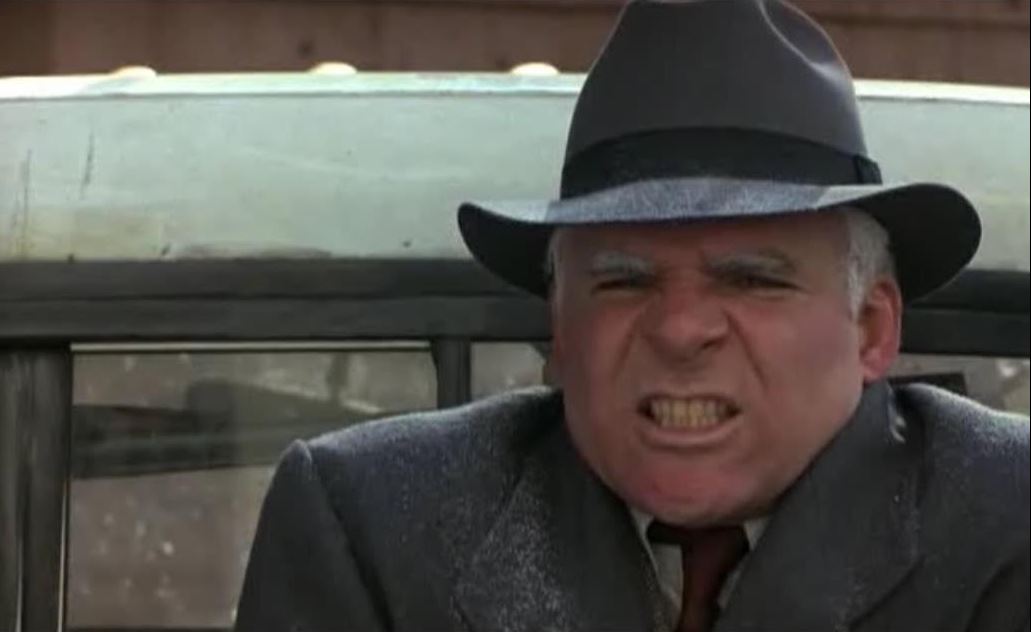
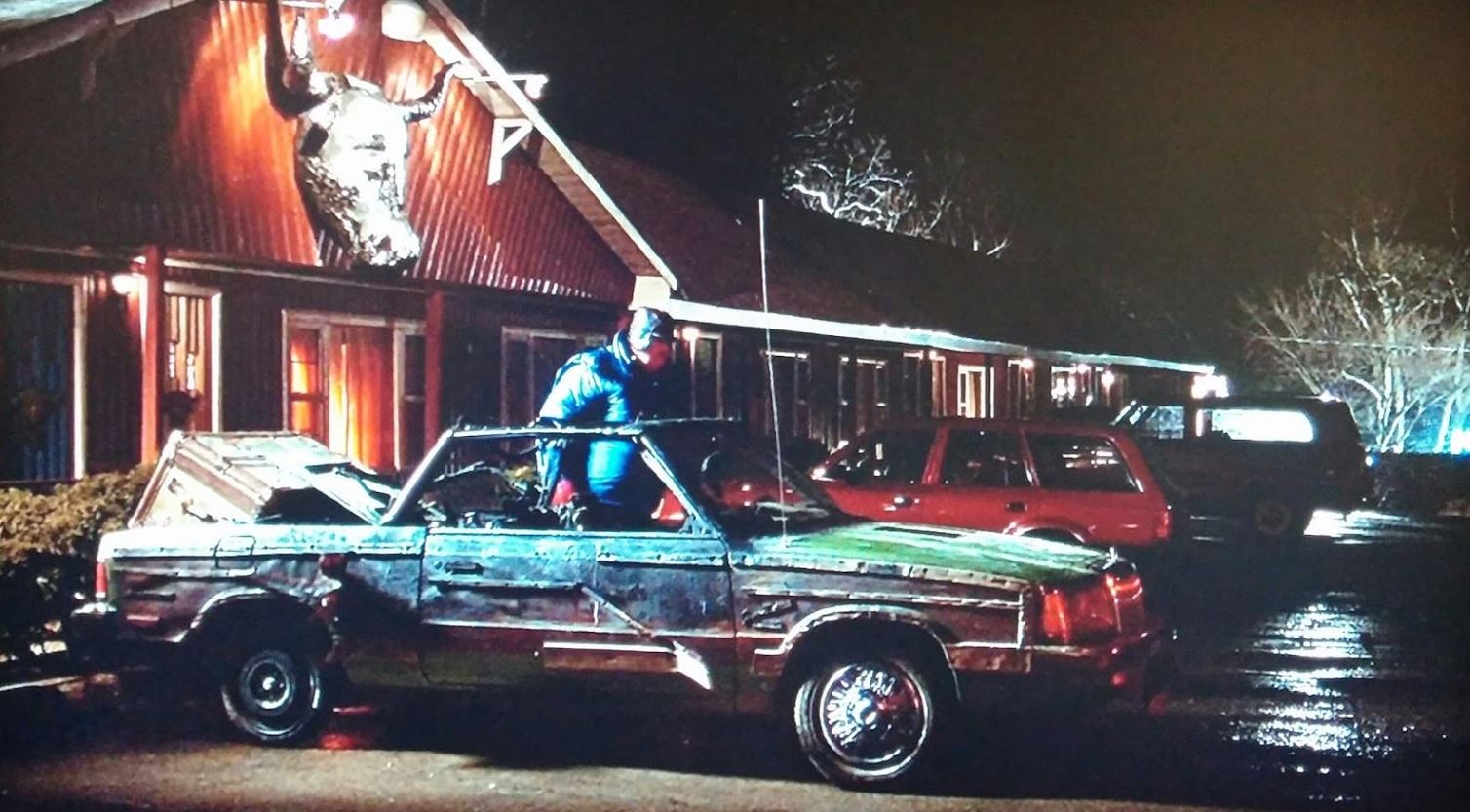
Few comedy scenes are as beloved as Neal’s meltdown at the rental car counter. After a nightmarish journey, he finally reaches the agent, played with icy perfection by Edie McClurg, and unleashes a torrent of pent-up fury. The scene is shocking, hilarious, and cathartic all at once. It also works because the film has earned it: we have watched Neal absorb every indignity, and we are thrilled to see him finally snap. The motel scene is another comic highlight, built on pure awkwardness. Forced to share a single bed because of a lack of rooms, Neal and Del wake up in a position that is wildly embarrassing for both men. The dialogue is quick and funny, and the escalating mortification is played perfectly by both actors. It is a tightly constructed bit of comedy that holds up no matter how many times you see it. The burned-out rental car sequence is equally unforgettable. After a series of accidents, Neal and Del are left driving a car that is barely recognizable, and the ride only gets worse when a passing driver yells that they are going the wrong way. The scene is outrageous, but the film plays it with such conviction that the absurdity feels earned. It is the sort of moment that people quote and reenact decades later.
What keeps Del from being merely annoying is the film’s deep sense of compassion for him. Hughes understands that people like Del, who talk too much and overshare, are often hiding something sad. The film invites us to be as irritated by him as Neal is, then slowly shows us how unfair that impatience has been. It is a lesson in empathy delivered through a comedy. Neal’s arc is just as satisfying. He begins the film as a man too self-absorbed to notice anyone else, and gradually learns to see Del as a human being rather than an obstacle. Martin handles that transformation with subtlety, letting small moments of softness slip through his frustration. By the end, the change feels completely earned rather than forced.
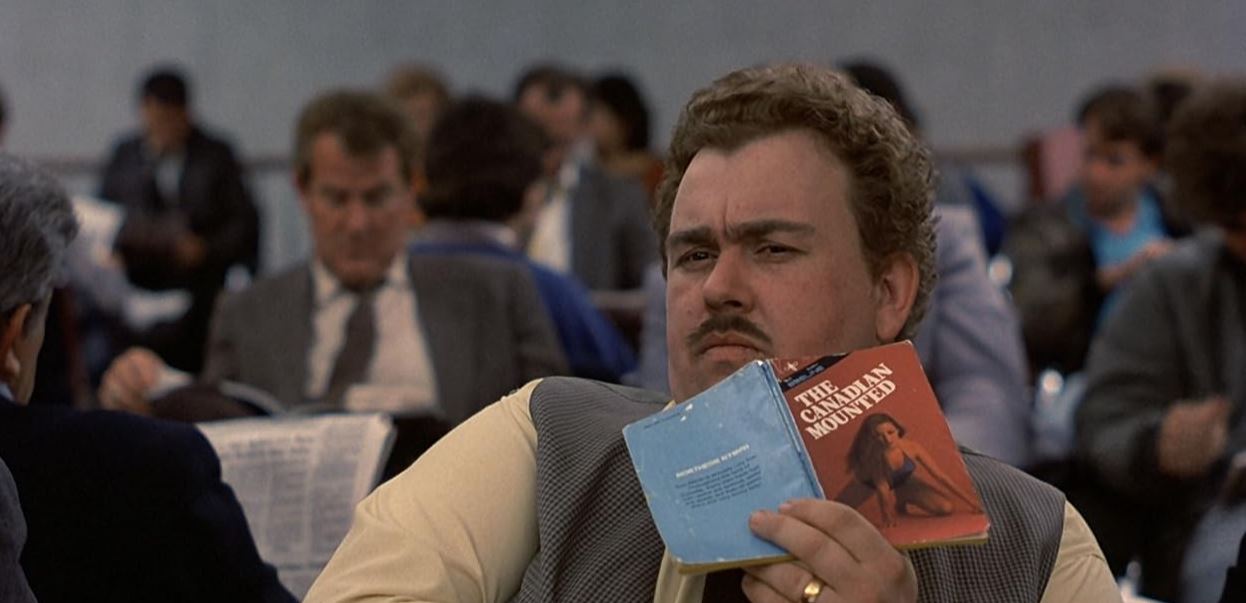
The film’s emotional turning point comes when Del finally pushes back against Neal’s cruelty. In a quiet, stinging speech, he explains that he is comfortable with who he is and that he has no interest in apologizing for it. It is one of the most powerful moments in any comedy of the decade, and Candy plays it without a hint of self-pity. The silence that follows is as important as anything either man says. Hughes also deserves credit for how beautifully the film captures the texture of holiday travel. The snowy landscapes, crowded stations, grim motels, and weary faces all feel authentic. That realism grounds the comedy and gives the story a warm, nostalgic glow. You feel the cold, the exhaustion, and the intense longing to be home.
The film’s rewatch value is extraordinary. Every viewing reveals new details in the performances, from small glances to throwaway lines that deepen the characters. It has become a holiday tradition for many families, and it works equally well in November or any other time of year. Few comedies get better with age, but this one does. Its legacy is secure. Planes, Trains and Automobiles has influenced countless buddy comedies and road movies, but few have matched its balance of laughter and genuine feeling. It also stands as a reminder of how much talent John Candy had and how deeply he is missed. The film is a lasting tribute to what he could do.

The ending is one of the most moving in comedy history. When Neal learns the truth about Del’s situation, his frustration finally gives way to compassion, and he does something simple and generous that changes both of their lives. The final scenes are tender without becoming sappy, and the emotional payoff lands with enormous force. Even viewers who have seen the film many times often find themselves tearing up. This is a film that does everything right. It is hilarious, heartfelt, beautifully acted, and flawlessly constructed from its first minute to its last. I laughed, I cried, and I came away feeling a little kinder toward the strangers around me. It is a full 10 out of 10.
© 2026 CoastalCarolinaNews.com. All rights reserved.

Be the first to comment