

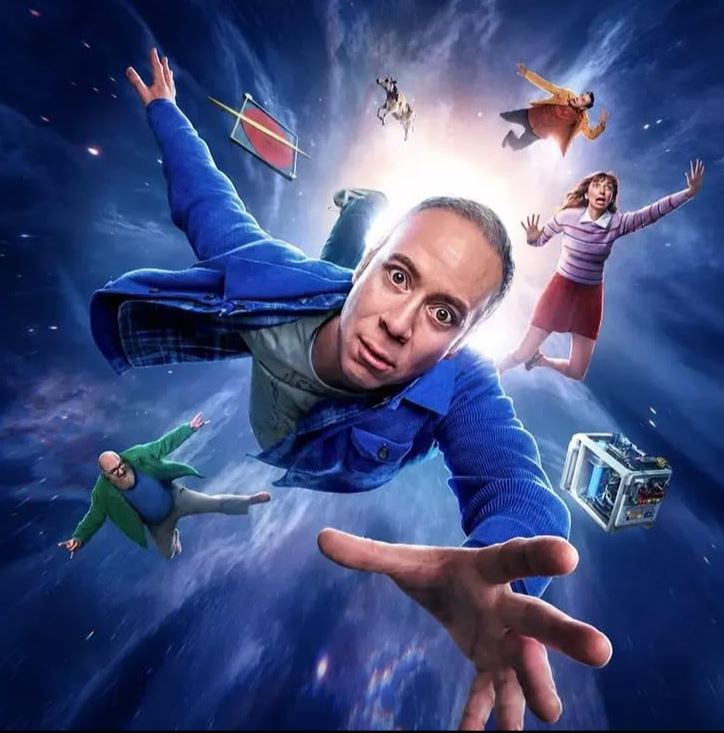
Stuart Fails to Save the Universe Season 1 is a strange, generous, and frequently delightful spin on the Big Bang Theory universe, earning an 8.5 out of 10 for the way it turns four supporting characters into the least qualified heroes imaginable and then lets them bounce through realities that feel both lovingly specific and completely unhinged. The premise is simple enough to pitch and wild enough to sustain ten short episodes: comic-book store owner Stuart Bloom damages a quantum-interference device built by Sheldon and Leonard, triggering a multiverse collapse, and must try to put reality back together with Denise, Bert, and Barry Kripke in tow. What follows is not a sitcom with sci-fi wallpaper but a genuine genre hybrid that keeps changing the rules of the world while the four leads stay recognizably themselves.
Kevin Sussman is the reason the whole thing coheres. His Stuart has always been the franchise’s most quietly tragic figure, and here that quality is sharpened into something approaching reluctant heroism. He is still anxious, still underconfident, still the guy who cannot believe anyone would put him in charge, yet the writing and performance allow him small, earned moments of competence that never feel like a personality transplant. Lauren Lapkus, Brian Posehn, and John Ross Bowie form a surprisingly sturdy ensemble around him. Denise is no longer just the girlfriend who puts up with Stuart; she has agency, irritation, and warmth. Bert’s deadpan geology-nerd energy is used as both comic ballast and unexpected practical skill. Kripke remains a magnificent pain, and Bowie leans into the character’s speech impediment and sociopathic streak without turning him into a one-note villain.
The show’s greatest asset is its commitment to new worlds rather than endless recitation of old jokes. Each episode drops the quartet into a fresh reality—post-apocalyptic Pasadena, a society that electrocutes people for being rude, versions where familiar faces are witches or warlords or something even odder—and the production design and writing treat those settings as more than punchlines. The short episode lengths (often under twenty-five minutes) help; the series never lingers long enough for a concept to go stale. Cameos from the original Big Bang Theory cast work better than they have any right to, because they are usually alternate-universe distortions rather than simple reunion specials. Seeing warped versions of people you already know creates a specific kind of recognition laugh that does not require the viewer to have memorized twelve seasons of continuity, though the extra layer is there if you want it.
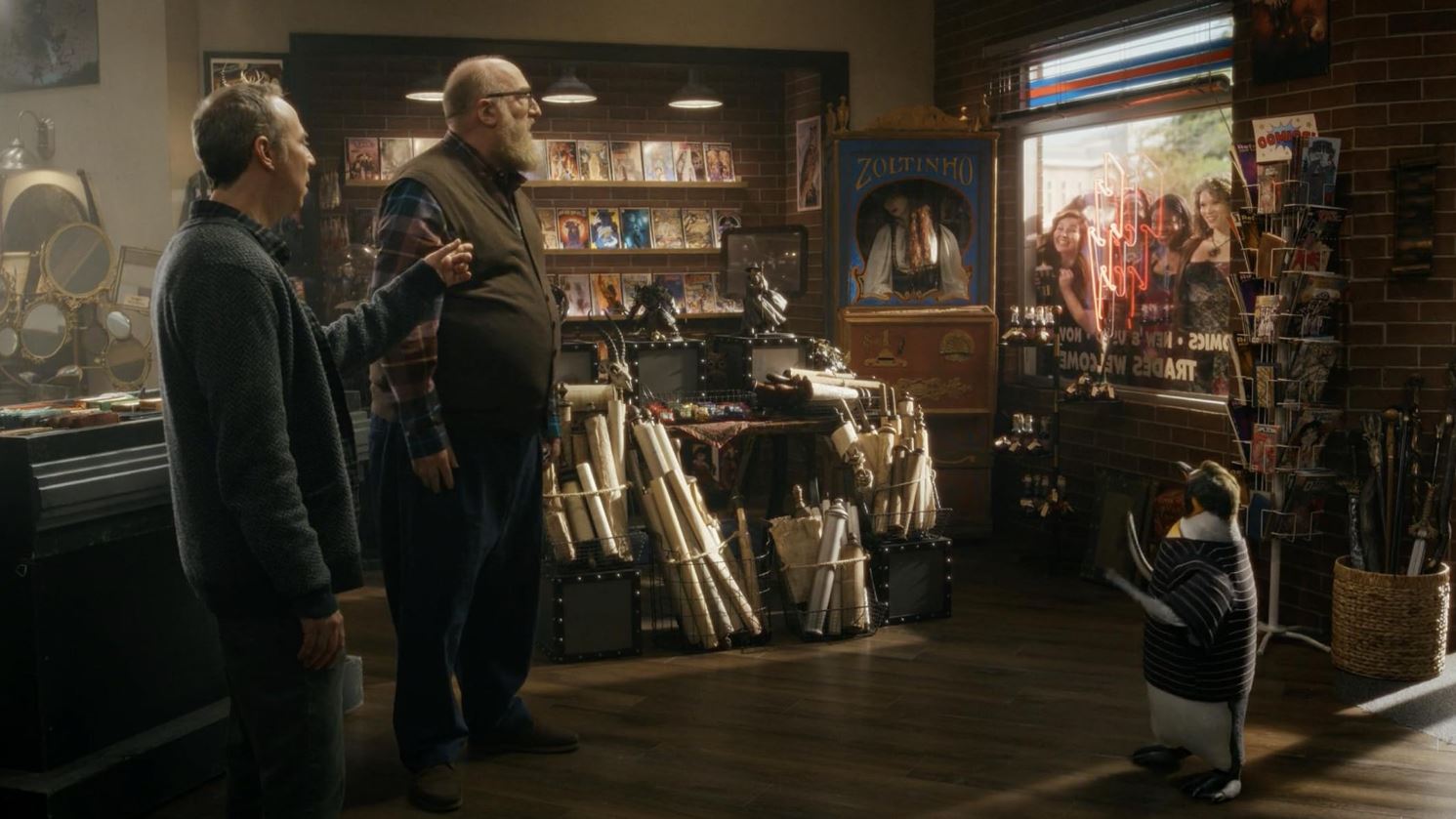
The humor is drier and more visual than the multi-camera original. There is no laugh track, and the jokes often come from the collision of nerdy specificity with cosmic stakes rather than from punch-up-the-setup rhythms. When it lands, it is sharper than expected; when it misses, the episode is over before the miss can dominate.
Chuck Lorre, Zak Penn, and Bill Prady clearly wanted to do something that made them uncomfortable, and that restlessness shows in the best way. Special effects, location work, and tonal swings that would have been impossible on a four-camera soundstage give the series a sense of play that the mothership sitcom, for all its strengths, rarely attempted.
The relationship between Stuart and Denise is the emotional through-line, and it is handled with more care than some critics have credited. It is not a grand romance; it is two people who keep finding each other across realities and slowly deciding that is not an accident. That modest scale fits the characters.
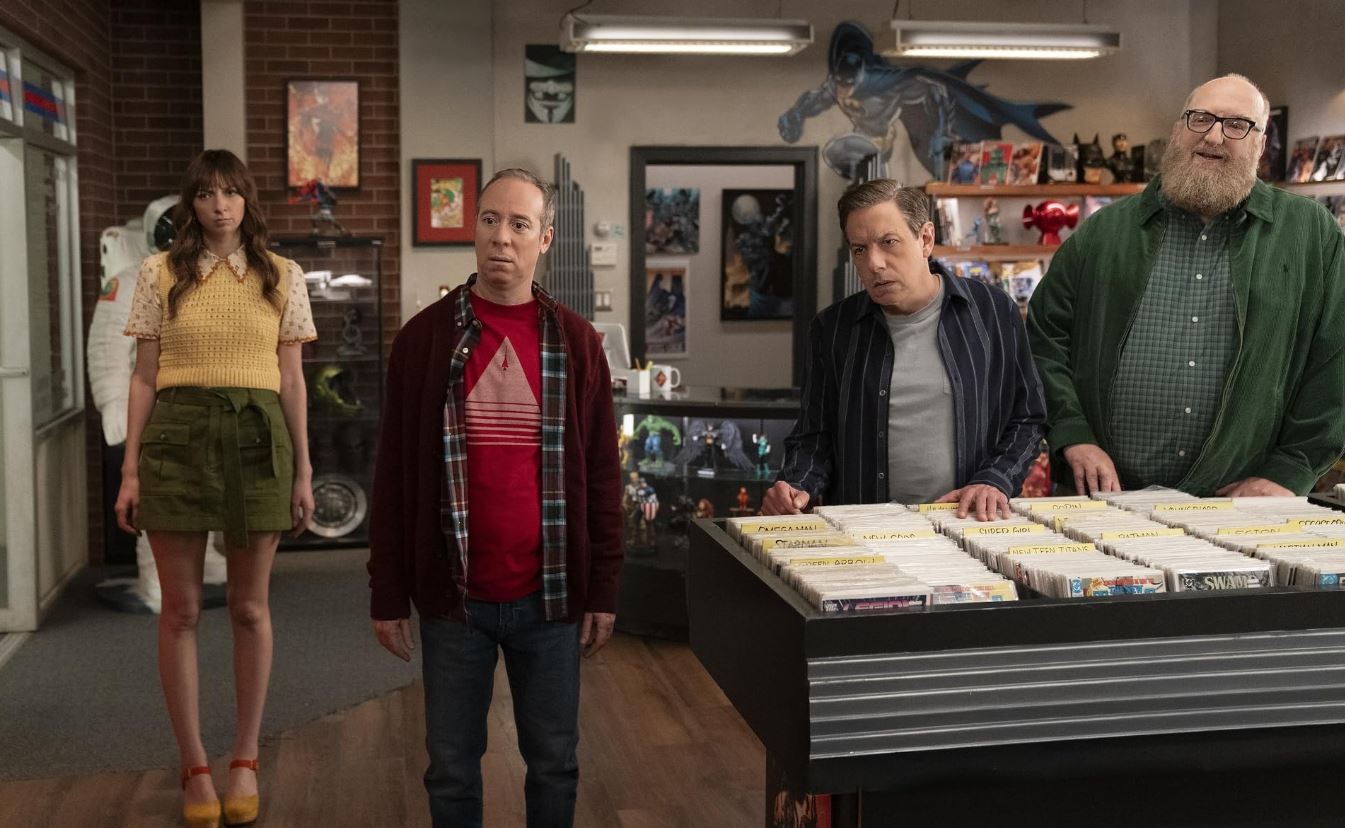
Pacing is brisk to a fault. A few episodes feel like they resolve their central gag just as it is getting interesting, and the MacGuffin device can start to feel like a reset button rather than a story engine. Those are real limitations, but they are the limitations of a first season that is still figuring out how much plot versus how much riff it can carry.
The title is both joke and thesis. Stuart does fail, repeatedly and inventively, and the series is honest about the fact that these are the wrong people for the job. That honesty keeps the show from becoming another chosen-one fantasy and instead makes it a comedy about people who keep showing up anyway.
Visual invention is consistently high. Giant moths, reality tears, neck-zap devices, and casually grotesque alternate anatomies are presented with a matter-of-fact sitcom lighting that makes them funnier. The show understands that the weirdest image is often the one treated as ordinary. For longtime Big Bang viewers the series offers the pleasure of seeing neglected characters get the spotlight without demanding that the original show be rewritten. For newcomers it still functions as a self-contained adventure comedy about four misfits and a broken machine. That dual address is harder than it looks.
Season 1 ends without pretending the universe has been neatly saved, which is both narratively honest and commercially smart. The renewal for a second season feels earned rather than obligatory. The first ten episodes prove the concept has more worlds left in it.
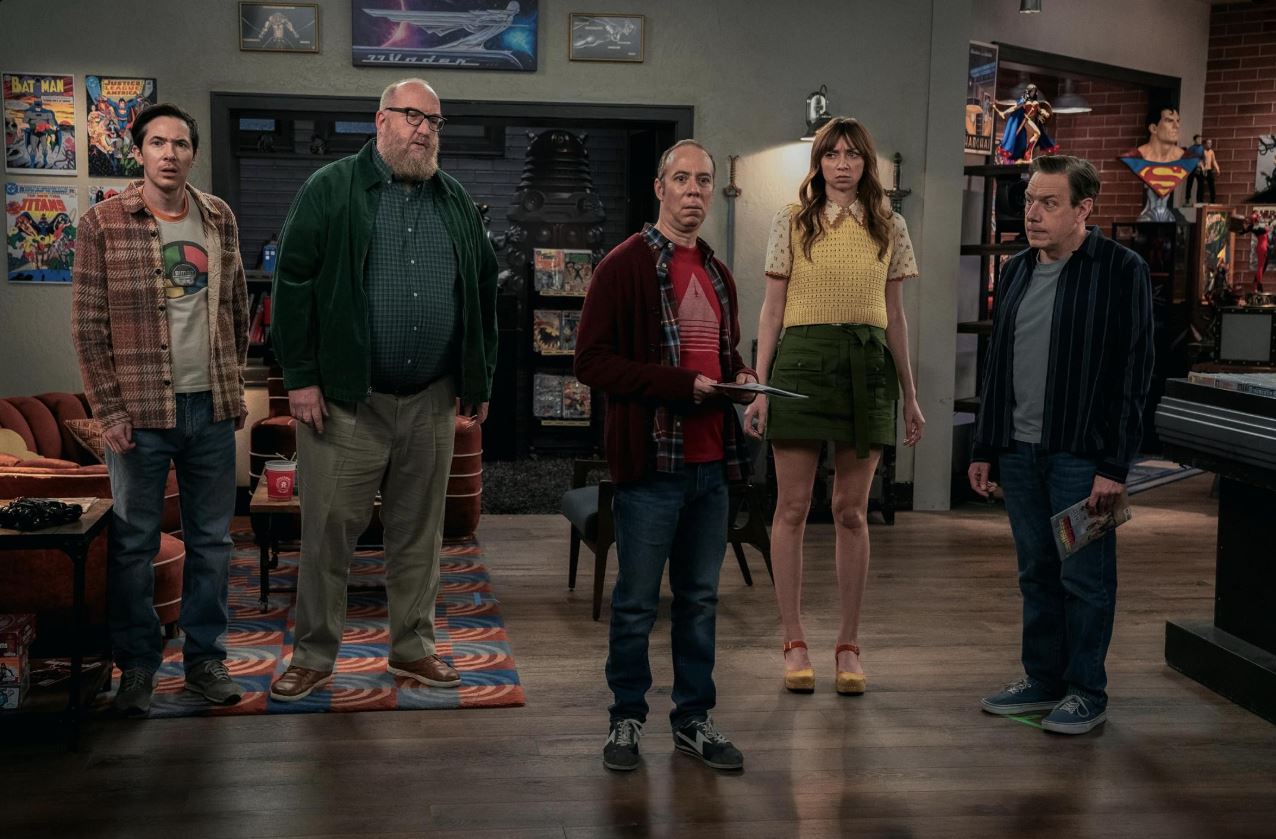
An 8.5 is not a claim of perfection. The show can be uneven, occasionally meaner than it needs to be, and a little too proud of its own meta flourishes. It is also the most interesting thing the franchise has produced since the original series found its footing, and it is consistently more fun than a spin-off about Stuart Bloom had any business being. If you want the old living-room rhythms, this is not that show. If you want to watch four people who were never supposed to be protagonists fail upward through the multiverse with surprising grace, Season 1 is worth the trip.
© 2026 CoastalCarolinaNews.com. All rights reserved.

Be the first to comment