
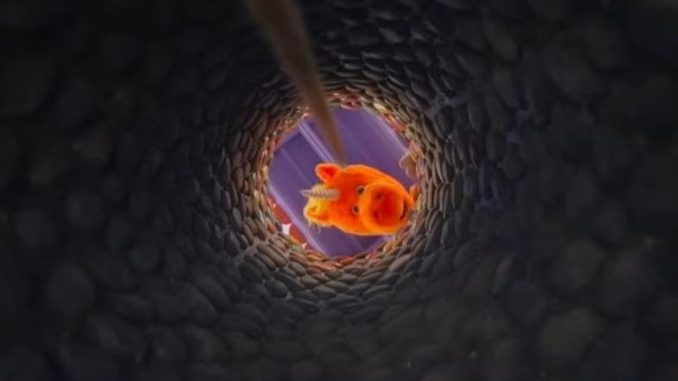
Buddy (2026) is a gleefully twisted comedy-horror that takes the comforting rituals of 1990s children’s television and turns them into something genuinely nightmarish. Directed by Casper Kelly, the mind behind the viral short Too Many Cooks, the film understands exactly how to make pastel colors, sing-along songs, and forced cheer feel sinister. It earns a firm 7.5 out of 10 for its inventive premise, strong central performances, and consistent commitment to its bizarre tone.

The story centers on the fictional show It’s Buddy!, a bright, educational series hosted by a giant orange unicorn named Buddy. Voiced with uncanny precision by Keegan-Michael Key, Buddy begins as the ultimate embodiment of wholesome children’s entertainment—encouraging, patient, and endlessly optimistic. When one child refuses to play along with the prescribed happiness, the unicorn’s smile hardens and the carefully constructed world starts to fracture in increasingly violent ways.
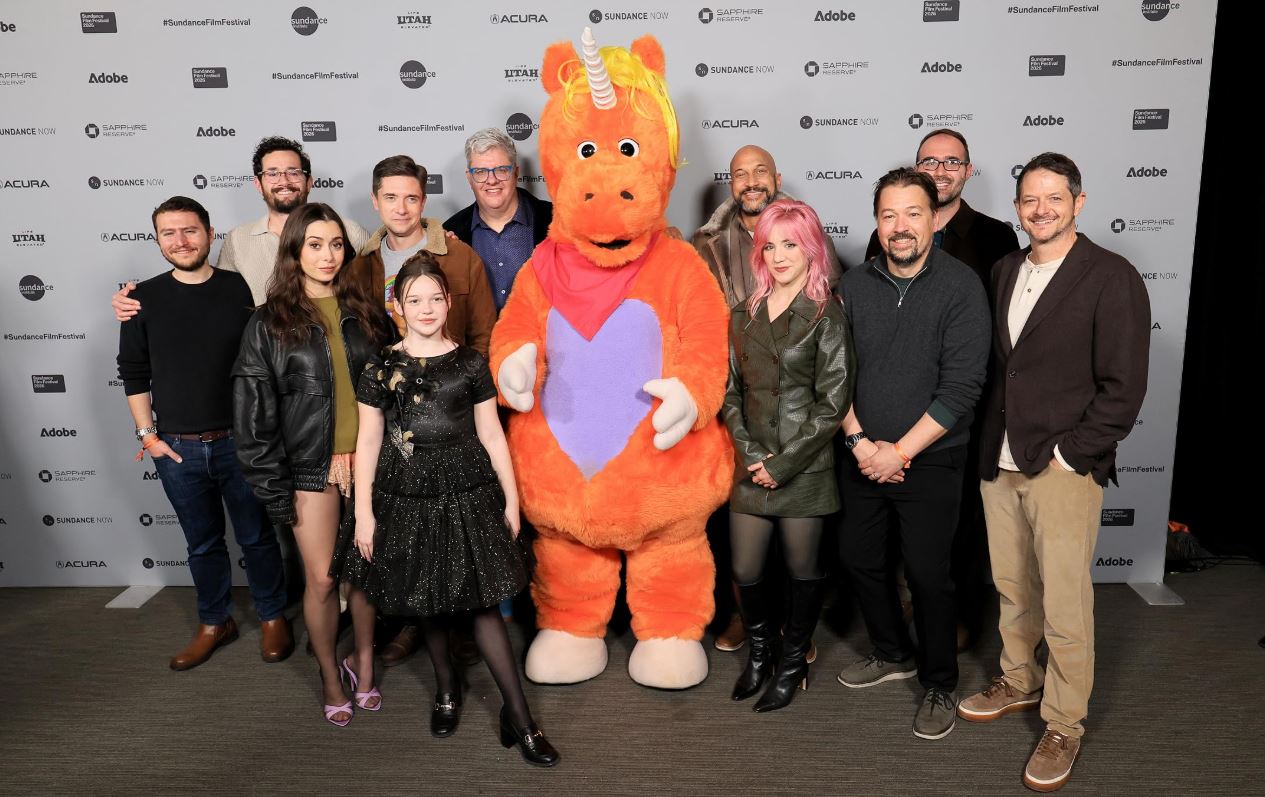
Cristin Milioti delivers the film’s most grounded and affecting performance as Grace, a mother who finds herself pulled into the show’s surreal reality. She plays the role with total sincerity, never winking at the audience even as the circumstances around her grow more absurd. That commitment gives the movie an emotional anchor that keeps the escalating mayhem from floating away into pure nonsense. Delaney Quinn is equally strong as Freddy, the resistant child who becomes the catalyst for Buddy’s transformation. Quinn manages to convey both genuine fear and a stubborn defiance that makes her character more than just a plot device. The supporting child actors hold their own in a difficult environment that demands they sell both the forced joy of the television world and the growing terror beneath it. The adult supporting cast is filled with welcome faces. Topher Grace plays Grace’s skeptical husband with just the right amount of oblivious normalcy, while Michael Shannon and Patton Oswalt appear in smaller but memorable roles that lean into the film’s deadpan weirdness. Key’s vocal performance remains the standout, shifting from honeyed encouragement to cold menace without ever losing the singsong cadence that made the character so unsettling.
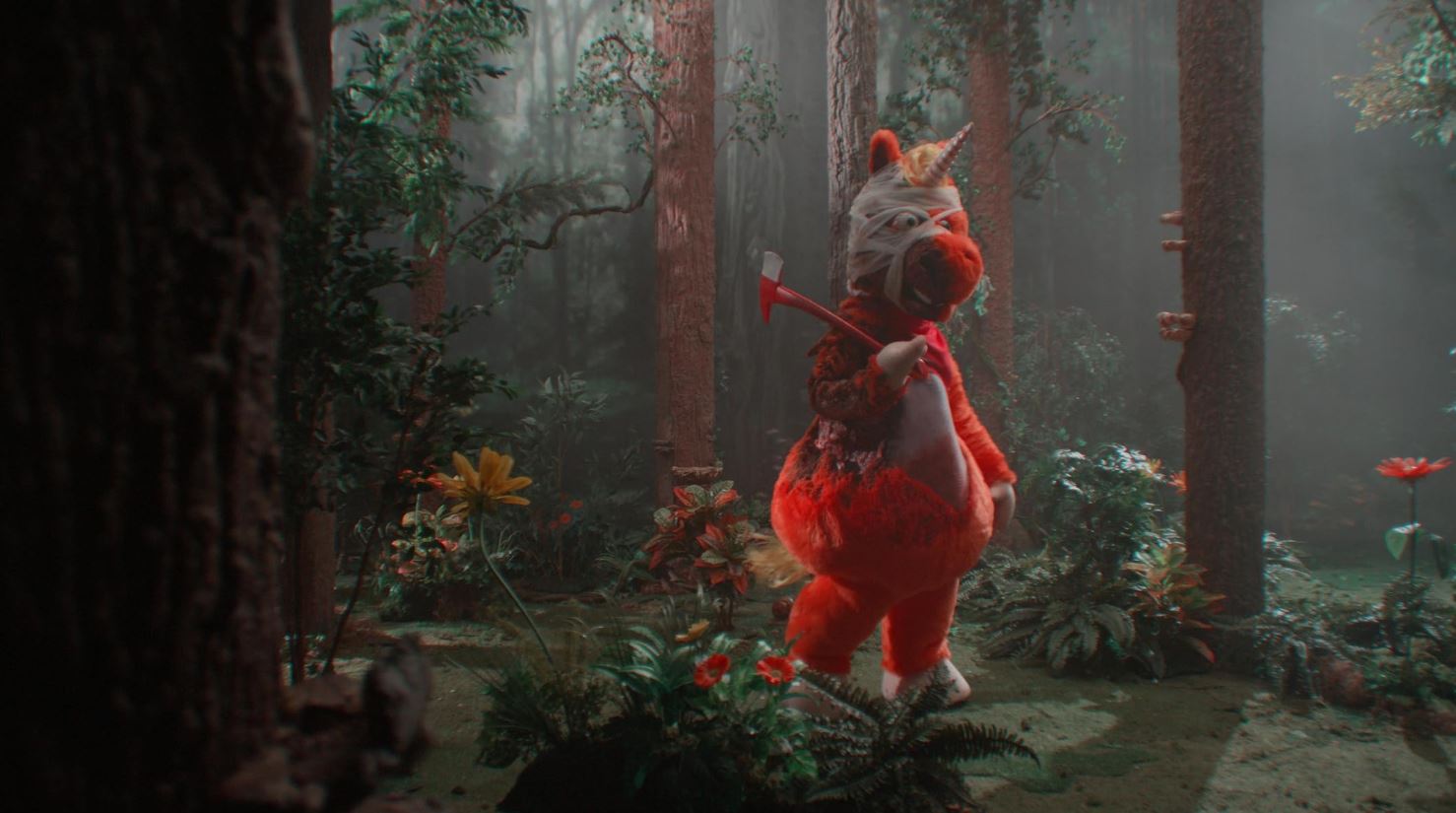
Kelly and co-writer Jamie King structure the film as a steady descent. The early scenes meticulously recreate the look and rhythm of low-budget public television children’s programming, complete with sentient household objects and repetitive moral lessons. Once the tone shifts, the contrast between that cheerful aesthetic and the sudden bursts of cartoonish gore becomes the movie’s primary engine of both horror and dark comedy. The production design deserves particular credit. The sets feel authentically cheap and brightly lit in the way old kids’ shows often were, which makes every act of violence land with greater impact. Practical effects and creature work keep Buddy’s physical presence tangible and threatening rather than relying too heavily on digital trickery.
Not everything works at the same high level. The third act leans harder into pure mayhem and loses some of the sharper observational humor that made the setup so effective. A few supporting characters receive limited development, and the internal logic of the show’s alternate reality occasionally feels fuzzy under closer scrutiny. Despite those shortcomings, the movie maintains a clear sense of identity throughout. It never softens its premise or tries to become something safer or more conventional. Kelly trusts the audience to follow him into the uncomfortable space where childhood nostalgia and genuine dread overlap.

The R rating is earned through both the intensity of the violence and the willingness to put children in genuine peril. Viewers sensitive to that particular brand of horror may find certain sequences difficult, though the film’s cartoonish exaggeration often provides a thin layer of distance. Humor remains a consistent strength. The jokes arise naturally from the clash between Buddy’s insistent positivity and the mounting chaos rather than from forced one-liners. When the film is funny, it is very funny in a specific, slightly mean-spirited way that fits the material. Visually and tonally, Buddy sits comfortably alongside other recent horror films that mine childhood media for terror, yet it feels more personal and idiosyncratic than many of its peers. Kelly’s background in surreal comedy gives the movie a distinct flavor that sets it apart from more straightforward slashers or pure pastiche efforts.
In the end, Buddy succeeds because it fully commits to its central idea and executes it with skill, energy, and a clear point of view. It is not a perfect film, but it is a distinctive and entertaining one that delivers on its promise of twisted nostalgia and bloody absurdity. For fans of unconventional horror-comedy, this 7.5 out of 10 effort is well worth seeking out.
© 2026 CoastalCarolinaNews.com. All rights reserved.

Be the first to comment