
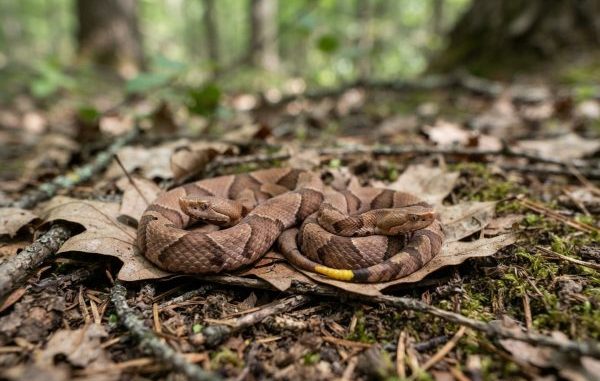
North Carolina has entered its annual baby copperhead season, a late‑summer period when juvenile copperheads begin appearing across the state and sightings rise sharply in residential areas.
From late August through early October, female copperheads give birth to litters of live young, and those juveniles begin dispersing into the same places people walk, garden, and take pets outside. Wildlife experts say this is one of the most active windows of the year for copperhead encounters, particularly in southeastern North Carolina, including Brunswick and Columbus counties.
Copperheads are the only venomous snake found in all 100 North Carolina counties, and their ability to thrive in both natural and suburban environments makes them a routine part of life in the region. As neighborhoods expand into wooded edges and creek corridors, residents often find themselves sharing space with wildlife that has lived here far longer than the development around it.
Juvenile copperheads look almost identical to adults, carrying the same hourglass pattern and copper‑colored head. The only reliable difference is a bright yellow or yellow‑green tail tip, which young snakes use to lure frogs and lizards close enough to strike. Newborns are typically six to eight inches long and blend easily into mulch, pine straw, and leaf litter, making accidental close‑range encounters more likely. Although juveniles are fully venomous, experts note that adults deliver more venom per bite due to their larger size.
Unlike many snakes, copperheads do not lay eggs. Females give birth to live young, usually six to fourteen at a time, and the newborns are independent from the moment they emerge. There is no parental care, no denning together, and no lingering family group. Juveniles remain near the birth site only briefly before dispersing to establish their own hiding spots and hunting areas. This is why residents may see one or two juveniles in the same general location before sightings quickly taper off.
Copperheads are most active from dusk through dawn during late summer and early fall. Warm evenings followed by cooler nights create ideal movement conditions, and juveniles often use the fading daylight to explore new territory. Residents are more likely to encounter snakes just before sunset, after dark when pavement and patios retain heat, and in the early morning as snakes return to shelter.
While copperheads can be seen during the day, the dusk‑to‑dawn window remains the highest‑activity period during baby season.
Wildlife officials strongly recommend wearing closed‑toe shoes or boots when walking outdoors during these hours, especially in areas with leaf litter, mulch, or tall grass. Most copperhead bites occur when a person accidentally steps on or near a snake, and proper footwear significantly reduces injury severity. Using a flashlight to scan driveways, porches, and steps before walking can also help prevent accidental encounters, particularly when taking pets outside at night.
Sightings increase this time of year for several reasons. Birth season naturally puts more snakes on the landscape. Weather patterns draw juveniles to warm surfaces. Landscaping choices such as mulch beds, pine straw, and decorative rock borders mimic natural habitat. And rapid development across southeastern North Carolina continues to push human activity into prime copperhead territory. Residents most often report juveniles in mulch beds, leaf litter, driveways, sidewalks, wooded edges, creek corridors, and mature neighborhoods with shrubs and shaded borders.
Wildlife officials advise giving snakes space and allowing them to move on their own. Copperheads are not aggressive and typically strike only when threatened or stepped on. Keeping pets leashed near wooded edges, using caution when working in mulch or leaf litter, and avoiding attempts to handle or relocate snakes can help reduce risk during this seasonal period.
This article was prepared using AI assistance and reviewed by Coastal Carolina News staff before publication.
© 2026 CoastalCarolinaNews.com – All rights reserved.



Be the first to comment