

Wes Craven’s original film remains one of the most influential and effective nightmare visions ever committed to screen. From the opening moments, it establishes a world where the boundary between sleep and waking life is dangerously thin, and that simple premise is executed with relentless creativity and dread. The result is a horror classic that still feels sharp, personal, and deeply unsettling more than four decades later. The story follows a group of teenagers in a quiet suburban neighborhood who begin sharing the same terrifying dream figure: a burned man with a bladed glove who stalks them in their sleep. As the deaths mount and the adults refuse to confront the truth, the film builds an escalating sense of helplessness that few slashers have matched. Craven keeps the plot lean and purposeful, never letting exposition drown the mounting fear.
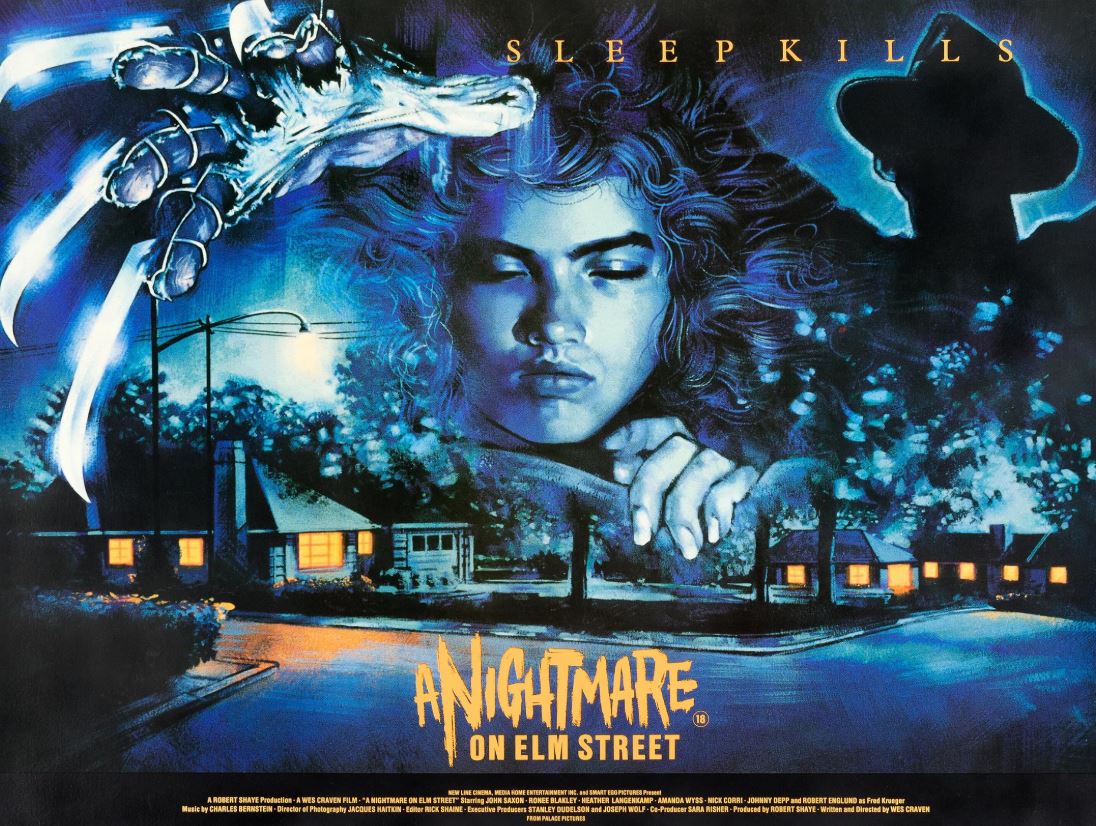
Direction is one of the film’s strongest assets. Craven stages the dream sequences with a nightmarish logic that feels both surreal and grounded, using practical effects, distorted sets, and clever camera work to make the impossible feel immediate. The pacing never lags; every scene either advances the characters’ desperation or deepens the mythology of the killer who invades dreams. Atmosphere saturates every frame. The quiet suburban streets of Elm Street become sinister once night falls, and the film expertly contrasts the ordinary daytime world of school and family with the chaotic, rule-free realm of sleep. That contrast is what makes the horror land so hard—viewers are never allowed to feel safe even in the most mundane settings.
Freddy Krueger himself is a masterstroke of character design and concept. He is not merely a masked killer; he is a taunting, sadistic presence who weaponizes the victims’ own minds against them. The idea that dying in a dream means dying in reality gives every sequence genuine stakes, and Freddy’s gleeful cruelty elevates him above generic slashers of the era. Robert Englund’s performance is iconic for good reason. He brings a wicked theatricality and dark humor to the role without ever undercutting the menace. The way he delivers lines, moves, and interacts with the dreamscape turns Freddy into a fully realized personality rather than a silent threat, and that personality is what made the character endure.

Heather Langenkamp anchors the film as Nancy Thompson, a resourceful and increasingly determined final girl. Her performance grows more compelling as the story progresses; she is neither passive nor invincible, and her gradual understanding of the rules of the nightmare feels earned. The emotional weight of her fight against both Freddy and the denial of the adults around her gives the film its heart. The supporting cast is uniformly strong. Johnny Depp, in his feature debut, brings natural charm and vulnerability to Glen. Amanda Wyss and Nick Corri effectively convey the mounting paranoia of the group, while the adult performances—particularly those of the parents—add layers of buried guilt and willful blindness that enrich the story’s undercurrents.
Practical effects and makeup still hold up remarkably well. The iconic glove, the burned visage, and the inventive death sequences rely on tangible craftsmanship rather than digital shortcuts. Moments that once shocked audiences continue to feel visceral because they were achieved with ingenuity and physicality instead of pixels. The score and sound design amplify the unease without overpowering the images. Charles Bernstein’s music shifts between eerie motifs and sudden stabs of intensity, while the sound of Freddy’s glove scraping metal has become one of horror’s most recognizable audio signatures. Silence is used just as effectively, letting tension accumulate before the next assault.

Beneath the scares, the film explores themes of repressed trauma, parental failure, and the power of belief. The revelation of Freddy’s origins ties the teenagers’ nightmares to the sins of the previous generation, giving the story a moral weight that pure body-count films often lack. It is a horror movie about consequences that refuse to stay buried. Its influence on the genre cannot be overstated. The concept of a killer who invades dreams opened new creative territory for horror and inspired countless imitators, sequels, and reimaginings. Yet the original retains a purity of vision and a sense of discovery that later entries and copycats rarely recapture.

Memorable set pieces—particularly the bathtub sequence, the body-bag moment, and Nancy’s final confrontation—demonstrate Craven’s skill at turning simple premises into unforgettable images. These scenes linger long after the credits because they tap into universal fears of vulnerability and loss of control. In the end, A Nightmare on Elm Street stands as a high-water mark of 1980s horror: inventive, unsettling, and emotionally resonant. It earns its 9 out of 10 through strong direction, unforgettable villainy, committed performances, and a concept that still feels fresh. Anyone interested in the roots of modern nightmare cinema should experience the original—preferably with the lights off.
© 2026 CoastalCarolinaNews.com. All rights reserved.

Be the first to comment